Written by
Dr. Efe Çelebi
Dentist
Published: July 5, 2026
Dental Implant Costs in the UK 2026
According to 2026 data, the average cost of a single dental implant in the UK market ranges from £1,800 to £4,200.
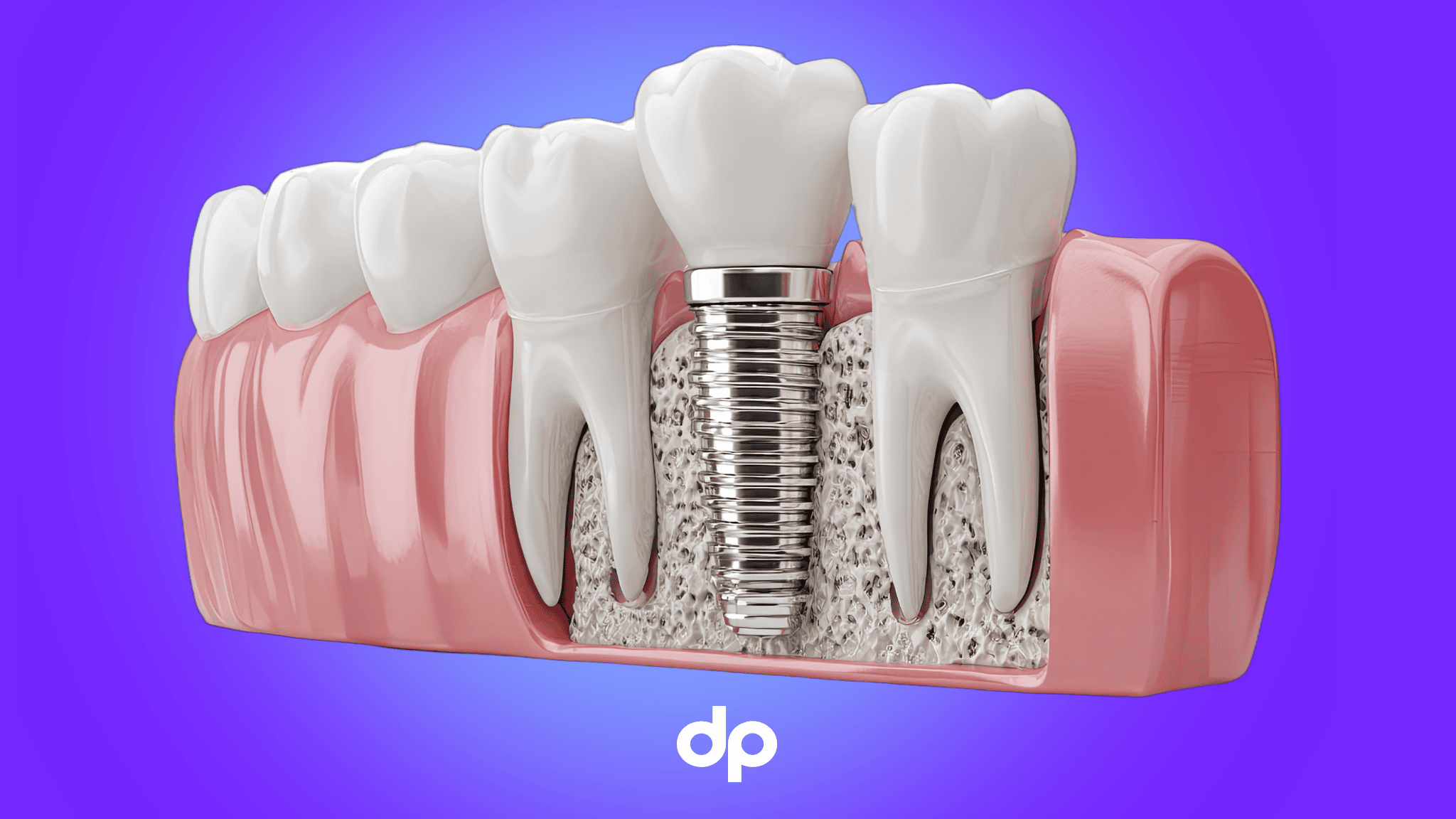
Across the UK, the cost of dental implants in 2026 varies significantly based on a wide range of factors. Recognized as the most permanent and reliable solution for missing teeth, implants successfully meet both the aesthetic and functional expectations of patients at the highest level. According to 2026 data, the average cost of a single dental implant in the UK market ranges from £1,800 to £4,200. The primary reasons for this price difference include the brand of the implant used, the level of expertise of the treating dentist, and the geographical location of the clinic. For more comprehensive restoration procedures like All-on-4, which cover the entire jaw, costs can reach between £10,000 and £20,000 per jaw. In complex cases requiring full mouth restoration, the budget should be estimated between £22,000 and £40,000. Dentistry services in the UK are subject to very high quality controls and strict health regulations, which means the operational expenses of clinics are quite high. As dentalPrices, a marketplace platform connecting patients with dental clinics, we have compiled the most up-to-date pricing data across the UK to present it to you transparently. Remember, we are not a clinic ourselves; we are a platform designed to help you find the best options. Finding the most suitable clinic for your budget and medical needs without encountering surprise costs requires having the right information. When researching prices, it is crucial not to focus solely on starting figures but to also consider laboratory and material fees that may arise in the later stages of treatment. Dental implant treatment is a long-term health investment that will provide lifelong results with the right clinic and budget planning. Understanding market dynamics is the most fundamental step to making the right decision.
Implant Prices in the UK Current Price List
The current UK implant price list for 2026 has been reshaped in light of exchange rates, clinic costs, and technological advancements. Patients often fall into the misconception that the starting prices they see in advertisements cover the entire process, but in reality, the situation requires much more detailed planning. Looking at current price lists, the cost of placing a standard titanium screw alone and the cost of the porcelain or zirconium crown to be placed on it are calculated separately. According to data obtained from hundreds of clinics across the UK, the total cost of a single tooth treatment starts from £1,800 levels, even in lower-segment clinics. The most important point patients should pay attention to when examining the price list is what the provided quote includes. Consultation fees, 3D CBCT scans, temporary prostheses, and post-surgical check-ups are often not included in the starting price. To avoid surprises in a comprehensive treatment plan, clinics should be asked for detailed quotes where each item is clearly stated. Fluctuations in price lists are also attempted to be balanced with payment conveniences and installment options offered by clinics. Clinics in the UK market generally aim to facilitate patients access to treatment by offering interest-free or low-interest monthly payment plans. Transparent listing of prices is one of the issues clinics must pay the most attention to in order to gain patients trust and allow them to start the treatment process with peace of mind. In the following sections, you can find detailed price tables and analyses separated by treatment types and brands.
Prices by Dental Implant Treatment
Implant treatment prices are directly categorized according to the scope of the procedure to be applied and the number of missing teeth in the patient mouth structure. Single tooth implant treatment is the most cost-effective and rapid solution for patients who have lost only one tooth, averaging between £1,800 and £4,200. In cases of multiple missing teeth, instead of placing a separate implant in each gap, three-unit implant-supported bridges supported on two implants can be preferred, and the cost of this treatment ranges from £4,000 to £7,000. In cases of total edentulism, innovative All-on-4 and All-on-6 systems come into play. These systems, which support the entire jaw with only four or six strategically angled implants, eliminate the need for bone grafting, saving both cost and time. The complete restoration of a single jaw with the All-on-4 concept is priced between £10,000 and £20,000 on average in the current 2026 UK market. Full mouth restoration, which involves renewing both the lower and upper jaws completely with fixed prostheses, can start from £22,000 levels and go up to over £40,000. The determination of the treatment method relies entirely on the anatomical structure of the patient jawbone and the radiological evaluations to be made by the dentist. Comparing the prices of these different treatment options on a clinic basis and finding the right specialist is one of the greatest advantages offered by the dentalPrices platform.
| Treatment Type | Average UK Price 2026 |
|---|---|
| Single Tooth Implant | £1,800 - £4,200 |
| Implant Supported Bridge (3 units) | £4,000 - £7,000 |
| All-on-4 (Per Jaw) | £10,000 - £20,000 |
| Full Mouth Restoration | £22,000 - £40,000+ |
Prices by Implant Brand
The numerous implant brands available in the market are among the leading factors that directly determine pricing and affect quality. Premium brands with decades of research and development history shorten the osseointegration time and maximize the success rate thanks to their special surface technologies. The prices of these high-end brands are naturally above the market average and are the first choice for patients seeking quality. On the other hand, mid-segment brands that have entered the market with newer technologies but have passed reliability tests are also included in clinics lists as budget-friendly alternatives. During the consultation between the patient and the dentist, the most appropriate brand selection should be made considering budget constraints and anatomical requirements. Engineering details such as the quality of the titanium alloy, thread design, and micro-roughness directly determine the cost structure of the brands. Choosing unknown brands with no clinical history just because they are cheap can lead to much heavier costs in the long run, such as implant rejection. Therefore, it is essential to choose reliable manufacturers without compromising on quality. You can find a detailed review of some of the most preferred brands in UK clinics in our subheadings.
| Implant Brand | Segment | Average Price per Tooth 2026 |
|---|---|---|
| Osstem | Mid-Range | £1,500 - £2,500 |
| Astra Tech | Premium | £2,800 - £4,500 |
| Nobel Biocare | Premium | £2,800 - £4,800 |
| Straumann | Premium | £3,000 - £5,000 |
Astra Tech
The Astra Tech implant system, of Swedish origin and produced under the umbrella of Dentsply Sirona, is a high-end product considered one of the most respected premium brands in the world. The greatest feature of this brand is that it minimizes bone resorption and perfectly protects the gum tissue thanks to its special micro-thread design in the neck region. In addition, the OsseoSpeed technology used on its surface allows bone cells to attach to the implant surface much faster, significantly shortening the healing process.
Due to its high technological infrastructure and long-term scientific evidence, its pricing is shaped accordingly. As of 2026, the surgical placement and prosthetic restoration of a single Astra Tech implant in the UK market averages between £2,800 and £4,500. Frequently recommended by dentists, especially in cases where anterior aesthetics are critical, this brand provides peace of mind to patients by offering a lifetime warranty.
Straumann
Straumann is a brand that represents the pinnacle of Swiss engineering and holds the undisputed leadership position in the global implant market. Thanks to its special titanium and zirconium alloy called Roxolid, it is much thinner than standard implants but significantly more durable, allowing it to be used safely even in cases of bone deficiency without the need for additional surgical procedures.
At the same time, with its SLActive surface technology, it can reduce the healing time to a record level of three to four weeks. Due to this unique speed, durability, and superior aesthetic results, Straumann implants are among the highest-priced options in the UK market. According to 2026 data, the turnkey price of a single Straumann implant is in the band of £3,000 to £5,000 on average. Its near-perfect success rate and global support availability are the main reasons why patients prefer this brand despite its high cost.
Nobel Biocare
Nobel Biocare is a legendary brand that laid the foundation of modern implantology and is the patented creator of the All-on-4 concept, which broke new ground, especially in cases of complete tooth loss. Their special surface coating, called TiUnite, guarantees surgical success by providing extraordinary initial stability even in the weakest and softest bone structures.
Thanks to its massive clinical database and innovative prosthetic solutions brought by years of experience, it allows dentists to manage cases much more flexibly. In terms of pricing, Nobel Biocare products are in the premium segment, and the cost of a single tooth across the UK is between £2,800 and £4,800. It stands out as a solution that more than pays for its investment, thanks to the unparalleled reliability it offers, especially for patients planning multiple missing teeth or full jaw restoration.
Osstem
Osstem is one of the most popular mid-range implant brands globally and is frequently used in UK clinics as a reliable alternative to premium brands. It offers a very high success rate for standard cases and provides an excellent balance of cost and quality for patients with budget constraints. The average cost of a single Osstem implant in the UK ranges between £1,500 and £2,500, making it highly accessible.
Prices Based on the Number of Dental Implants
The simplest mathematical factor that directly affects the treatment cost is the number of implants the patient needs, but this calculation does not always show a linear increase. While one screw and one crown are used for a single tooth gap, it is much more logical and economical to make a bridge supported on two screws instead of using three separate screws for three adjacent missing teeth.
This approach both protects the patient from extra surgical trauma and eliminates the material and labor cost of the third implant. As the number increases, economies of scale come into play, and the cost per implant in clinics can show some flexibility. For example, in full jaw treatment, fourteen implants are not placed to replace fourteen teeth; a small number of implants placed strategically with All-on-4 or All-on-6 techniques successfully carry the entire load. The condition of the jaw structure, the patient chewing force, and the type of prosthesis to be applied play a key role in the dentist decision on how many implants are needed. It is of great importance for patients to choose the right clinics through reliable platforms like dentalPrices to prevent costs from being inflated by placing more implants than necessary. In summary, although the total cost increases as the number increases, the rate per unit decreases, and the budget can be optimized with rational engineering planning.
Factors That Affect Implant Prices
Behind the fact that dental implant prices are so variable in the UK market lies the complex dynamics that require the treatment to be planned entirely specifically for the patient. Implant treatment, which is a medical operation rather than a simple purchase, involves countless variables from the quality of the material used to the manual dexterity of the dentist. Instead of proceeding with a standard starting price, an appropriate budget must be drawn up for the anatomical realities of each patient. The time spent in the clinic, the depreciation of the high-tech equipment used, sterilization processes, and the professionalism of the support team are directly reflected in the total bill.
This entire process may seem complex, but thanks to the dentalPrices platform, it is possible to make the most transparent decision by comparing clinics, the services they offer, and their areas of expertise. Our goal is to ensure that patients fully understand what awaits them before starting treatment and to enable them to make choices in an environment free from information pollution. By examining the fundamental factors that affect prices upwards or downwards in detail, we can put how budget planning is done into a clearer framework.
The brand and quality of the implant
The brand and manufacturing quality of the implant is the most fundamental item that makes up the bill because this small screw is designed to become a part of the human body. Premium brands spend billions of dollars on research budgets to increase the purity of titanium and modify its surface to attract bone cells. Thanks to these scientific investments, the fusion time of the implant with the bone is shortened, the risk of infection decreases, and chewing function is provided smoothly for many years. Moreover, quality brands guarantee flawless aesthetic results by producing much more diverse and durable intermediate parts for the porcelain or zirconium crowns to be placed on them.
Cheap, low-quality brands may provide short-term savings, but in the long run, they lay the groundwork for massive problems such as screw breakage, bone melting, and severe intraoral infections. In this investment in health, compromising on quality merely to reduce the price is one of the biggest risks that can be taken. For a successful treatment, it is a vital necessity to choose proven brands that have global certificates and offer lifetime warranties.
Number of dental implants placed
As mentioned above, the total number of implants to be placed in the jawbone during the operation directly changes the course of the bill. The time and material spent for a single gap are fixed, but as the number increases, the difficulty of the surgical procedure and the size of the prostheses to be produced in the laboratory grow. In treatments covering the entire jaw, increasing the number of implants to be placed from four to six means a longer surgery time as well as the cost of more titanium screws.
The idea that a higher number is always better is wrong; what matters is not the quantity, but placing the screws at the most biomechanically correct angles and in the strongest bone points. Clinics generally try to balance the total cost by offering package discounts to their patients for multiple implant cases. The minimum sufficient number to be determined by the dentist as a result of detailed tomography analysis both protects the patient pocket and ensures that the post-surgical recovery period is much milder.
Additional Surgical Procedures
Many patients encounter severe melting and tissue loss in the jawbone when they decide to get treatment long after tooth loss. Sufficient bone volume is essential for the implant to hold on healthily; if the bone is insufficient, additional surgical interventions come into play, and these procedures seriously increase the cost. Bone grafting is the triggering of new bone formation by placing synthetic or animal-derived graft materials into the deficient area, and the UK average for this procedure is between £300 and £1,500.
When bone height decreases in the upper posterior jaw, a sinus lift operation is mandatory, which requires high expertise and increases material costs. In addition, damaged teeth that need to be extracted before the procedure or soft tissue grafts performed to correct gum formation are reflected as extra items on the bill. Since the life of implants placed without building a solid foundation will be short, these additional surgical operations should not be avoided for a successful result.
Regional Price Differences
Geographical location within the UK profoundly affects pricing in healthcare services, just as it does in real estate prices. The capital, London, is by far the most expensive treatment center in the country due to high rent expenses, staff salaries, and general operational costs.
Moving away from the center towards the northern regions, the same brand of implant and the same quality of service can be offered at much more accessible prices. However, when choosing a region, it is necessary to consider the clinic technological infrastructure and accessibility in case of an emergency, rather than just basing it on price. Given travel expenses and post-treatment check-up needs, the difficulties of getting treatment in a distant region can render the savings meaningless. By making regional price comparisons via dentalPrices, patients can easily list the quality clinics closest to them and most suitable for their budgets. When conducting market research, remembering that the region economic standards are reflected in the price tag is important for creating realistic expectations.
Dentist and Clinic
The most important factor determining the success of implant treatment is the experience and dexterity of the dentist performing the surgical procedure. The fees demanded by specialist surgeons who have completed master degrees in implantology and have the experience of thousands of cases are quite high compared to general dentists. Because the patient is paying not only for a titanium screw but also for the experience of a master who can instantly solve potential complications.
Likewise, investments such as the clinic technological equipment, 3D digital scanners, software used for guided surgery, and the porcelain laboratory it houses within itself raise the treatment price. However, these investments shorten the operation time, reduce the margin of error to zero, and allow the patient to have a much more comfortable recovery process. Clinics offering cheap services generally lack qualified staff and use older generation technologies, which is a huge risk for long-term health. To find the most suitable specialist and equipped clinic for you, you can examine dentist profiles in detail using our marketplace platform.
Dental Implant Prices by Region in the UK
Understanding pricing differences within the UK geography is a critical step for patients to prepare the right budget. Due to socioeconomic differences between England, Scotland, and Wales, serious fluctuations are observed in dental fee tariffs. This regional analysis is important for patients to know what they will encounter locally and to evaluate alternative options to travel to nearby regions with more affordable prices if necessary. Especially patients seeking high-standard treatment can weigh whether the quotes they receive are reasonable by referencing the average price index of their region. Below you can find the updated 2026 average cost breakdown for dental implants by UK regions.
Central London
Central London is the absolute peak, home to the country most prestigious dental clinics and world-renowned maxillofacial surgeons. The massive rent expenses, high-end staff costs, and flawless patient experience provided by these centers located in luxury locations like Oxford Street and Harley Street are directly reflected in the prices.
The average budget patients should set aside for a single dental implant here reaches up to the £3,000 to £4,500 band. Advanced VIP services, digital smile design laboratories, and the luxury ambiance in the waiting room are a natural part of this high cost. Central London undoubtedly continues to be the first choice region for patients who seek perfection and prestige rather than being cost-oriented, and who want to get through even the most complex cases with zero errors.
Greater London & Home Counties
When we move slightly further out from the center, Greater London and the surrounding counties offer a relatively more balanced structure between quality and price. Clinics in this region still have high technological equipment and successful specialists, but are somewhat free from the abnormal real estate costs of the center.
In areas like Surrey, Berkshire, and Hertfordshire, a single implant treatment is offered to patients at prices ranging from £2,500 to £3,800. It constitutes a highly logical alternative for patients who want to achieve a ten or twenty percent savings without compromising the quality standards in central London. The highly competitive nature of the region ensures that clinics frequently develop special discount packages and flexible financing models to attract patients.
Midlands & South West
The central and southwestern parts of England host very reasonably priced treatment options, both because living costs are more stable and in line with local demand. Even in major cities like Birmingham, Manchester, and Bristol, the price advantages brought by competition bring a smile to patients faces. In this vast geography, the average cost of a single implant goes down to the £2,000 to £3,200 levels.
There are many successful centers that are not inferior to the capital in terms of dentist quality but can reflect this advantage to the patient thanks to low general expenses. Many southern patients who are willing to take short-distance trips for treatment frequently evaluate the reliable and budget-friendly options offered by this region.
North of England
The Northern England region stands out as the area where the most cost-effective and patient-friendly pricing policies in dental implant treatments are applied compared to the rest of the country. Since the operational expenses of clinics in cities like Leeds, Newcastle, and Liverpool are significantly lower than in the south, the applied treatment fees are highly competitive.
The average cost of getting a single dental implant in the north varies between £1,800 and £2,800, opening the door to serious savings. The low prices certainly do not mean that the quality is insufficient; on the contrary, there are massive health complexes providing services at international standards in these regions. For British patients looking for an affordable yet highly safe treatment, the northern region is always a geography that should be considered at the top of the list.
Scotland & Wales
Dental implant prices in Scotland and Wales generally show great similarities with the northern parts of England, but the impact of logistical costs can be seen in regions far from the center. Modern and high-tech clinics in main centers like Edinburgh and Cardiff offer successful treatments in the £1,800 to £3,000 band.
Since it is almost impossible to get implant treatment through the National Health Service in these regions, patients have to turn to the private sector, and clinics develop pricing strategies accordingly. Although there are slight price increases on a local basis as one moves towards rural areas due to the decrease in the number of specialist dentists, the general average is kept at levels that will not strain the patient budget. Both Scotland and Wales successfully pass the test of providing local people with access to high-standard treatment in their own regions.
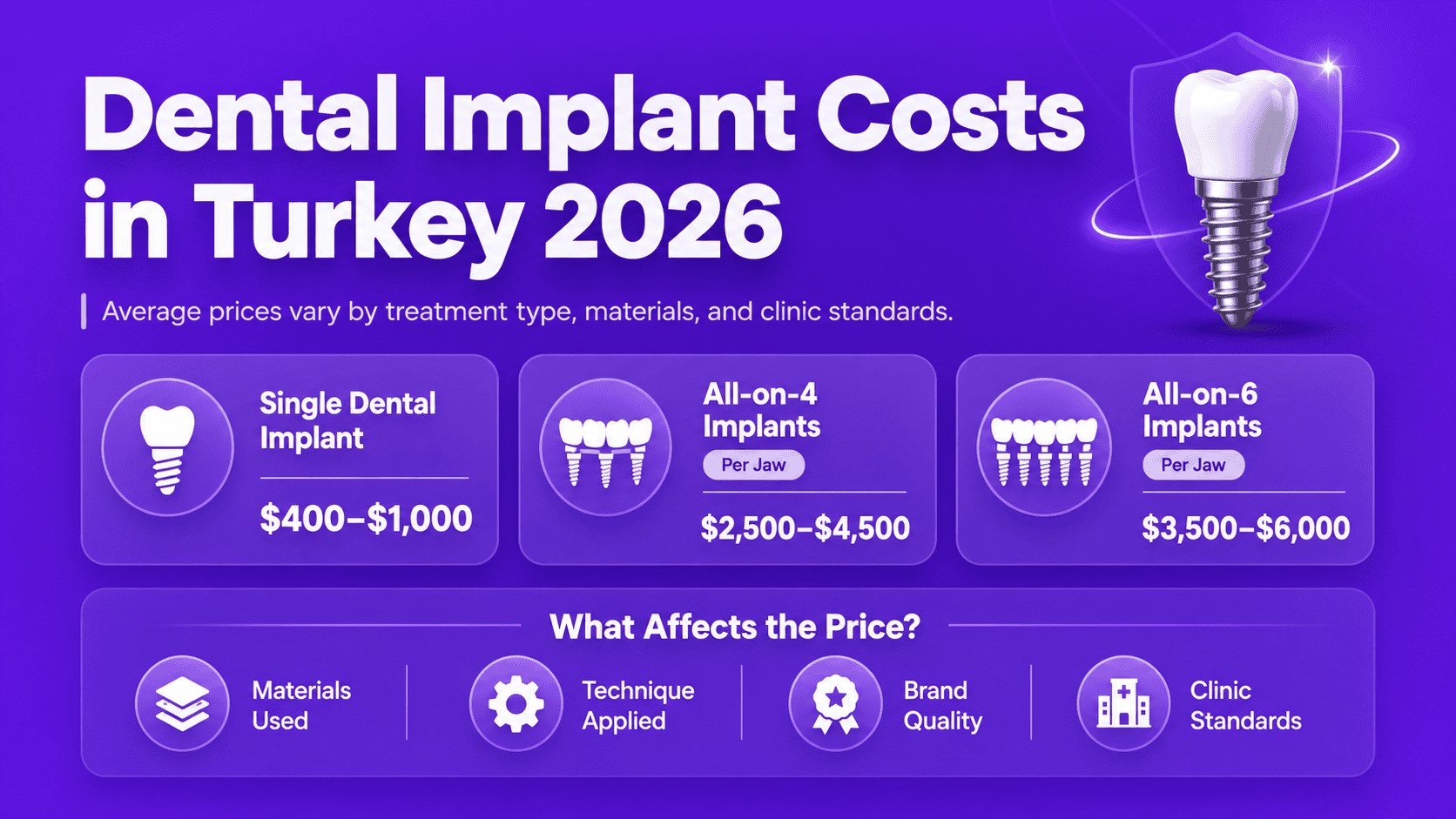
A Comparison of Dental Implant Prices in the UK and Turkey
The high costs of dentistry in the UK have strongly directed patients in recent years toward medical tourism, especially to Turkey, which has become a global brand in this field. When the current 2026 market data is compared, the price gap between the two countries reveals a very striking picture.
While a single dental implant in the UK starts at lowest £1,800 levels, the price of the same quality, globally recognized premium brand implant in Turkey ranges from £350 to £600. The All-on-4 treatment, which is a full jaw renewal operation, creates an average cost of £15,000 per jaw in the UK, while in Turkey this procedure can be completely resolved with a budget between £2,800 and £4,500, including ultra-luxury clinics.
This means a massive net savings of sixty to seventy percent for British patients, even when flight tickets, five-star hotel accommodations, and VIP transfer costs are included. The main reason why clinics in Turkey can offer such affordable prices is not compromises on quality; it is low labor costs, low local operational expenses, and high differences in exchange rates. On the contrary, clinics in major cities like Istanbul and Antalya are equipped with much more advanced technology devices and highly experienced maxillofacial surgeons than most clinics in Europe. Thanks to the guidance services and language support provided to patients throughout the treatment process, medical tourism turns into a highly comfortable holiday experience. However, the most important point patients should pay attention to is finding the right and certified clinic among thousands of options. As the dentalPrices platform, just as we offer the best local options for those who want to be treated in the UK, we also list the most reliable and audited clinics for patients who turn their route to Turkey, building a safe treatment bridge. Whichever country you choose, reaching transparent information and entrusting your health to the right specialists should be your top priority.